
Marissa, a 37-year-old domestic worker, buys a train ticket to Dadal every morning in Mumbai, a short 10-minute “shelter” away from her daily noise and busy work. Like many Indian urban dwellers, this waiting time was her “brushing”. On the screen of smartphones, between the crowd and the station, she silently painted short videos — sometimes Instagram Reels, sometimes mini soap operas on YouTube — filled with commuting and leisure.
“This is my few minutes, and I don’t have time to watch the whole show,” Marissa said.
These short dramas, which use the free time of fragmentation to provide “snack food” content, are sweeping the global content production market, as well as the Blue Sea, which a wave of innovative Indian companies are trying to seize.This series of two to three minutes each, full of twists and emotional flashpoints, is competing for the eyes of screen users who would have slipped for no purpose only at Instagram Reels or YouTube Shorts.
“We want to take time from Instagram Reels or YouTube Shorts,” said Kushal Singhal, founder of Indian short play platform Flickr TV. The company recently raised $2.3 million in a round of financing led by the Indian Windwards Company, Stellaris Venture Partners. “In the time of fragmentation, the elements of storytelling are missing. Everyone consumes it in Reels and Shorts, but they don’t remember what they read.”

One of Flickr TV’s plays consists of 50-60 micro-shorts, about 2-3 minutes each… – Designed for commuting breaks, tea breaks or lunch breaks. The inspiration comes from the 3-7-21 content formula in Chinese short play production (a 3-second change of scene, a hook every 7 seconds, emotional turn every 21 seconds), which is designed to turn passive screens into active participation.
Although 70 per cent of video consumption in India is mainly at the mobile end, the focus of users is declining sharply. Kushal Singhel explained, “We are adapting our narrative to the new window of attention. The audience won’t disappear. They’re just changing consumption patterns.”
Unlike traditional user-generated content (UGCs), these short play platforms focus on specialized content generation (PGCs), covering a wide variety of types such as love, crime, charisma and phantom. The audience is mainly people with “waiting time” rather than “recreational time”, such as commuters, shopkeepers and housewives.

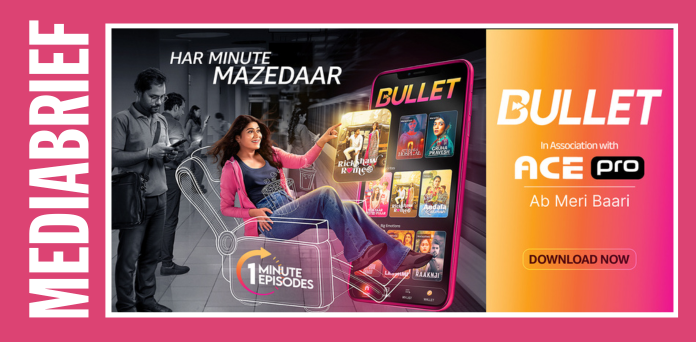
In India, another entryist, Bullet, was created jointly by Azim Lalani and supported by Zee (India ‘ s largest media entertainment company), whose target market went even beyond metropolitan areas to reach India ‘ s second and third-line cities. Bullet is preparing to launch a version covering seven regional languages in India.
“This audience was the same people who used to watch 30 minutes of soap, but now they want to finish it in two minutes,” Azim Lallani said. Each Bullet story has a total duration of 60-100 minutes and consists of a series of series of 60-120 seconds. In addition, Azim Larani stressed their focus on producing culturally resonant content. “We do not want to show many things that are unacceptable to Indian culture”, he said.
The game-making mechanism allows users to unlock the play by signing, recommending and making money in lieu. Azim Larani said: “This is not just about content; it integrates the entertainment experience of game design, economics and personalization.”
Although the short video is promising, for the Indian market, the profit model remains the biggest challenge for the micro-short play platform.
“advertisements are limited by the low cost (CPM) of thousands of displays in India, and subscription patterns rarely work on short content under Indian market consumption habits. There may be hope for small payments — but the feasibility of their large-scale application has not yet been tested, as indicated by Ashish Pherwani, a partner in media and entertainment operations in India.
He added that advertising revenues alone might not be sufficient to support high-quality micro-short play production.