

On the occasion of its second anniversary, Nintendo and Bocoma’s sleep-tracking hand-walking ” DreamSleep ” came up with a landmark moment. According to the latest data from Appfigures, the game officially broke the $100 million income mark in July and now has a cumulative global total of about $112 million.
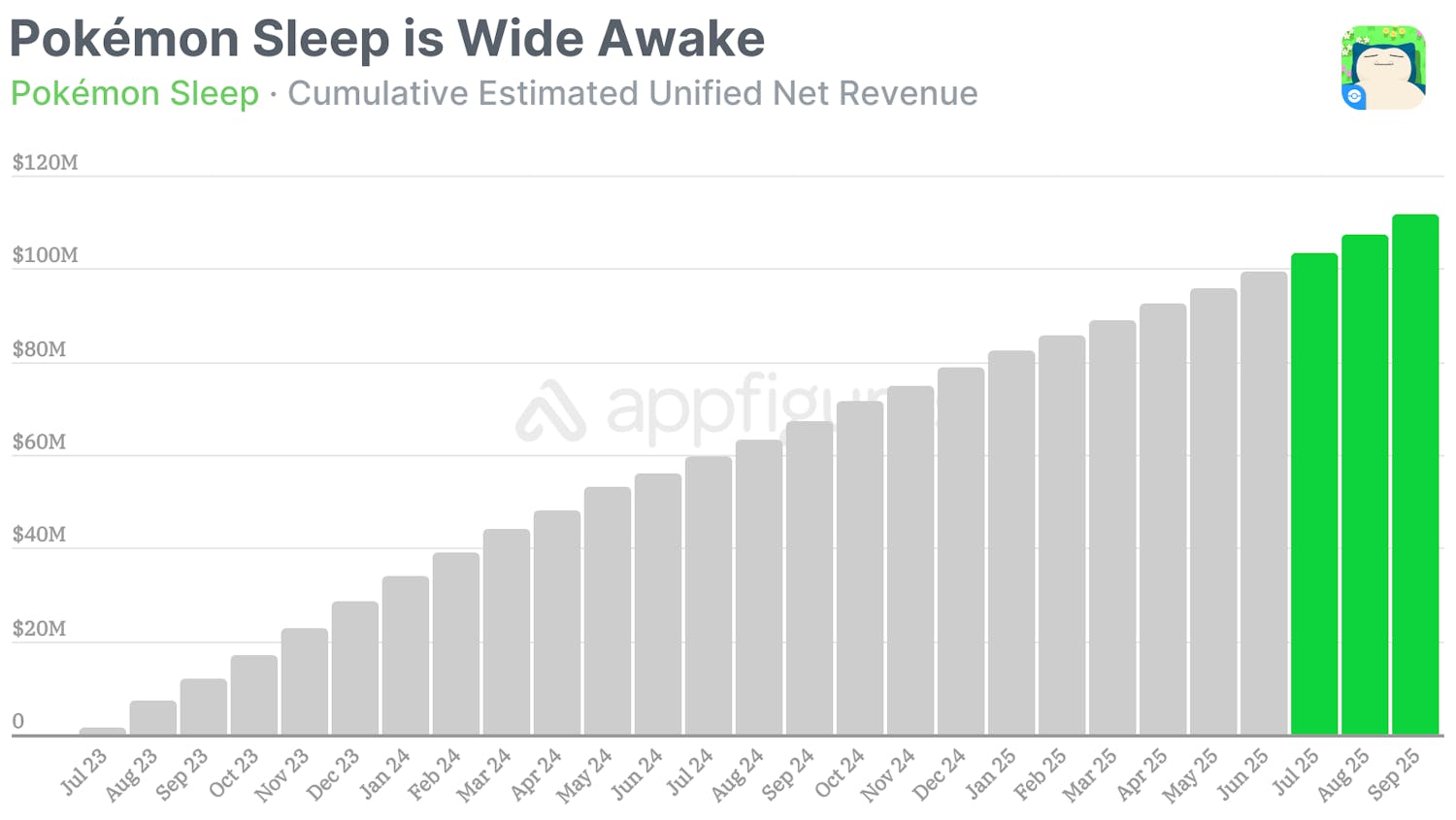
The Appfigures report, based on iOS and Android global data estimates, shows that DreamSleep broke out on the second anniversary (July 2025): The July single-month revenue of approximately $15 million directly contributed to the total revenue collection across the $100 million threshold. By early October, total income had stabilized at $112 million, with the Japanese market contributing the most (about 60 per cent to $67 million), followed by the United States (20 per cent) and Europe (15 per cent). The income structure of DreamSleep is dominated by domestic purchases: 70 per cent of the subscriptions to sleep-style analysis services (about $5 per month) and dreamable kits, with free downloads + advertising models contributing the remaining 30 per cent. Compared to the first year (2023-2024), the slow slopes (cumulative $60 million) accelerated the second year of growth, thanks to the new “treasure events”: like the July `freasible dreams’, the single-day peak income reached $500,000. In terms of downloads, over 50 million times over two years, an increase of 15 per cent in the July ring, and an ARPU (average user income) up to $2.24, well above the industry average of $1.2.
In the sleep tracking app sub-category, DreamSleep’s income of $112 million is far ahead. Using the example of Sleep Cycle, which in 2010 would have earned only $37 million in net revenue over two years, while the download was over $100 million, ARPU was only $0.37 and was dominated by advertising. Other competitions, such as Calm (Mediment + Sleep, $80 million in the first half of 2025) and Sleipieest (free tracking, less than $20 million) are difficult to follow. The root cause of the above-mentioned revenue gap is the IP magic: the dream of “collect + grow” makes sleep tracking “playing” — by “sleeping out” different treasures, unlocking research missions, and being sticky far beyond the tool App. The Appfigures data show that the share of IP-driven work income in the same type of app is as high as 60 per cent, while only 20 per cent of those without an IP. The success of DreamSleep echoes Nintendo’s “cross-border” strategy: From the AAR of the Dream Go to sleep tracking, IP has become a “flow code” for health.
The trajectories of Sleep have benefited from a number of factors: firstly, the dream design lowers the threshold — the “Snorlax Sleeping posture” animated the track, with female users increasing to 55 per cent. Second, when precision marketing went online, 10 million people were downloaded in the first month through Pokémon GO and TikTok challenges. Third, Data-drive trajectories: Appfigures reports that Nintendo uses sleep data to optimize events (e.g., “Summer Sleeping Dream”), with a 25 per cent increase in income in July. In 2025, the “serious game” market was over $50 billion in size, and 112 million in revenues from DreamSleep proved that IP+ was a healthy “chemical reaction” — similar works were expected to emerge, with a 20 per cent increase in the promotion subcategory YoY. For Nintendo, hand-to-hand business accounts for 15 per cent of total revenue, and the IP ecology penetrates from entertainment to life, with a high market value or re-innovation.