
Epic Gomes announced that, as of December 2025, the creators of Fort Night would be able to sell virtual items directly on the self-built islands they created. Epic announced that creators could create and sell “digital durability and consumables for games” through Verse API and a new version of the UEFN tool, but not for real goods.
While the developers “usually” would benefit from 50 per cent of V-Bucks’ return from the sale of goods, the proportion would increase to 100 per cent between December 2025 and December 2026. This does not mean that creators receive 100 per cent of sales revenue. In its bulletin, Epic details the calculation of the distribution of the game: The total amount of V-Bucks purchased per month (in United States dollars) in the real currency of the player, after deducting the cost of the platform and the store (12 per cent for the Epic game store and 30 per cent for the mainframe platform), is divided by the total amount of V-Bucks consumed by the player for the month to arrive at a United States dollar valuation for the month. Epic states that the average current cost of the platform and shop is about 26 per cent.
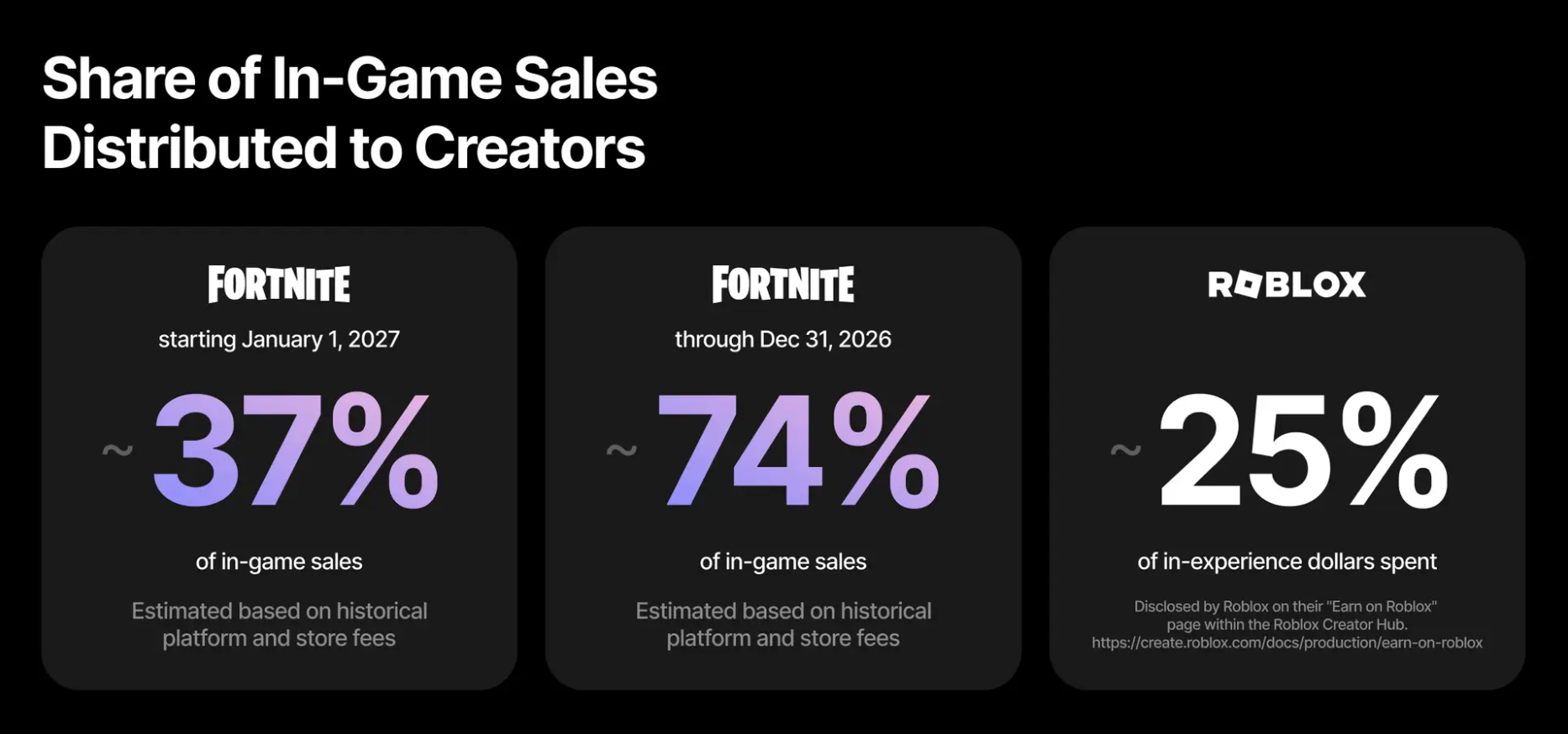
Thus, between December 2025 and December 2026, 100 per cent of the value of V-Bucks received by creators actually amounted to about 74 per cent of sales revenue. With effect from 1 January 2027, this proportion will be reduced to 50 per cent (about 37 per cent of sales revenue) and the remaining 50 per cent will be used for “the operating cost of maintaining the Fort Night ecosystem”, including server hosting, security clearance, research and development and other operating expenses. In addition, Epic updates the consensus on participation in order to “better reward creators who attract new or returning players”. Under the current programme, 40 per cent of net income from goods stores and related cash transactions is distributed to creators and the official island of Epic. As of 1 November 2025, creators who attract new or returning players will receive 75 per cent of the contributions of these players to the pool in the first six months. To identify standard players and islands, Epic will combine data such as “Strength access, in-playing and first-day play time”.
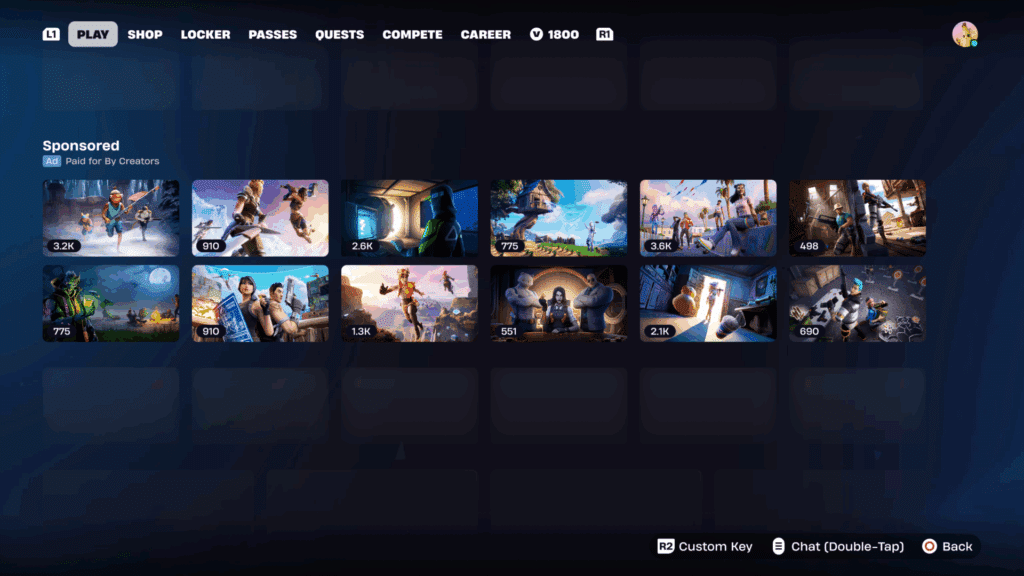
The new programme also adjusted the retention incentive scheme to focus on “retention performance on individual islands rather than ecosystem retention as a whole” to more accurately reflect the efforts of creators to operate. In order to prevent fraud, the new formula only captures player data with consumption behaviour, which Epic emphasizes as “not reducing the total amount of the pool, but adjusting the calculation”. The new participation split formula now covers dimensions such as the length of the game, new user acquisition, reflow user acquisition, V-Bucks consumption of surrounding time and island retention. Epic also announced the launch of the Sponsorship Place on the “Discovery” page on 24 November 2025, where creators can purchase exposures at competitive prices. All creators will be able to compete for transparent market data, while others will remain in natural flow. The initial (until the end of 2026) sponsorship income was 100 per cent injected into the pool and will be adjusted to 50 per cent in the long term.
Other creator functions include the creator portal campaign design function, launched on 17 November 2025, and the “creator community” platform, which will be online in the coming months, to facilitate interaction between creators and players. Epic states: “Since the release of UEFN, players have invested an aggregate of 11.2 billion hours on 260,000 creators ‘ islands, and 722 million shares have been paid to creators so far. We will continue to invest in new tools to unlock more development possibilities for creators.”