
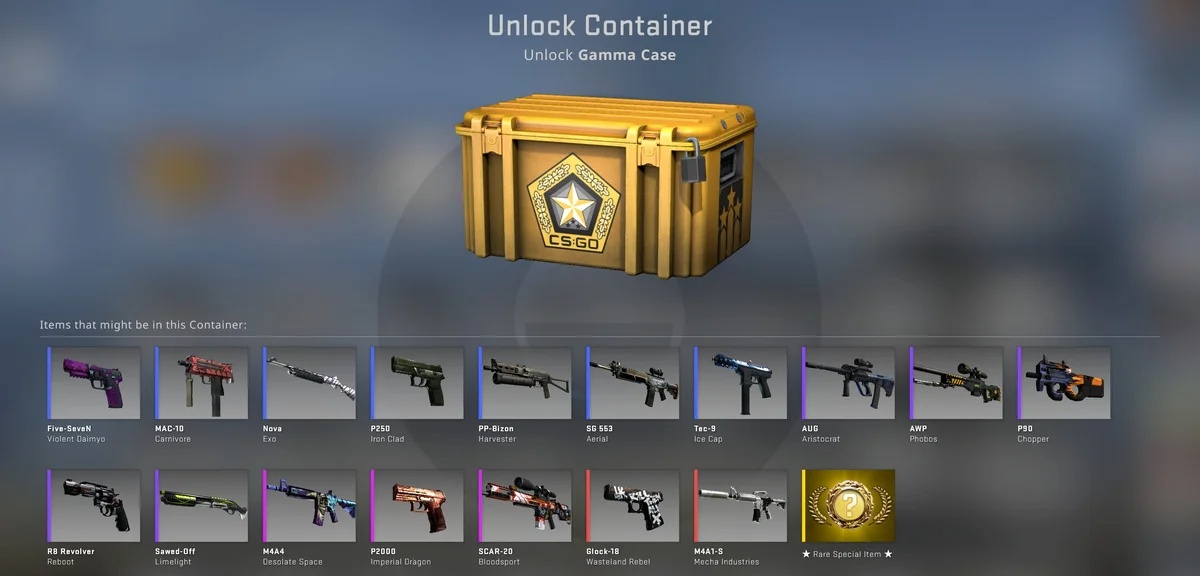
War booty boxes have been subject to controversy over their gambling mechanism, and many players and regulators have identified them as an incentive for consumption and addiction. As early as 2018, Belgium imposed a total ban on the sale of trophies and identified them as illegal gambling. The Dutch Government is promoting a complete ban on the boxing system and plans to extend it to the EU.
Poland also proposed a few weeks ago to classify trophy boxes as gambling, at a time when European regulators were constantly looking at how to regulate the design of such probabilistic games under the existing legal framework. The Supreme Court of Austria has recently ruled that the trophy box mechanism does not constitute gambling in the legal sense of the country and rejected a claim by a player to recover nearly 20,000 euros for insider purchases.

The trophies have long been at the crossroads of the game and gambling industries. Its mechanisms allow players to purchase virtual boxes containing random virtual items that include both decorative content and possibly role or performance aids that influence the game. Proponents regard it as a legitimate form of profit for the game, and critics fear that their gambling design may be harmful, especially to young players. The debate has always focused on whether the trophy box meets the legal definition of gambling, particularly in jurisdictions where gambling is strictly regulated or where State monopolies are imposed. Context of the Austrian case: football simulation game and claim of 20,000 euros The Austrian case focused on a football simulation game: players get virtual players through trophy boxes to form teams. Players purchase game “points” in real currency and convert different categories of trophy boxes. Although the range of items contained in each type of box is known in advance, the specific virtual players or objects are determined by random algorithms.

Between October 2017 and October 2021, the plaintiff spent nearly 20,000 euros on such virtual items. He argued that the acquisition and opening of the trophy box constituted illegal gambling under Austrian law because the game operator did not hold a gambling licence and therefore demanded a full refund. In its judgement of 18 December 2025, the Austrian Supreme Court upheld the lower appellate court ‘ s decision and rejected the player ‘ s claim. Court decision logic: emphasis on integrity, skills ownership and virtual closure The Court made it clear that the trophy box could not be severed from the embedded game, which must be seen as a whole. In the Court ‘ s view, the fundamental purpose of buying trophies was to use digital content in the game, not to obtain an independent economic return. Under Austrian law, gambling is defined as a game where the outcome depends entirely or primarily on the probability. The Court noted that when the outcome is influenced by both probability and skill, the decisive factor is whether the player is able to develop a rational expectation of success based on his/her ability. In the football simulation game examined in this case, the court found that the player could significantly influence the outcome of the game through tactics, tactics and operational skills. While it is random to obtain a single digital item from a trophy box, this randomness does not determine the overall success or failure of the game. The court therefore found that the player had failed to prove that the outcome of the game was fully or primarily dependent.

The Austrian Supreme Court also cited a common reason for opposing the classification of trophy boxes as gambling: their content was purely numerical. Items opened cannot be transferred outside the playing environment, sold to other players or converted to real value. The Court found that the unexternal circulation of digital items, together with the close technical integration of the trophy box and the game, supported its conclusion that “the mechanism does not constitute an independent gambling contract”. The judgement shows that differences still exist in the way the trophies of the European team are regulated. While some countries were considering stricter rules, the Austrian Supreme Court held that trophy boxes did not constitute gambling if the game was dominated by skill rather than chance. At present, the decision provides Austria with clear legal guidance, but it also reveals that national courts continue to take different positions on similar game mechanisms. The debate on trophies is far from over.